
Introduction to Plastic Scrap Recycling
Plastic scrap recycling has become one of the most important industries in modern manufacturing. With increasing awareness about environmental sustainability and the growing demand for cost-effective raw materials, recycled plastics are playing a major role in industrial production. Businesses across various sectors now rely on recycled plastic materials to reduce production costs while supporting environmental conservation.
Plastic scrap is not simply waste. It is a valuable resource that can be collected, sorted, processed, and transformed into reusable raw materials. Different types of plastic scrap have different recycling values depending on their properties, demand, purity, and industrial applications. Understanding these materials helps manufacturers, recyclers, and traders make informed purchasing decisions.
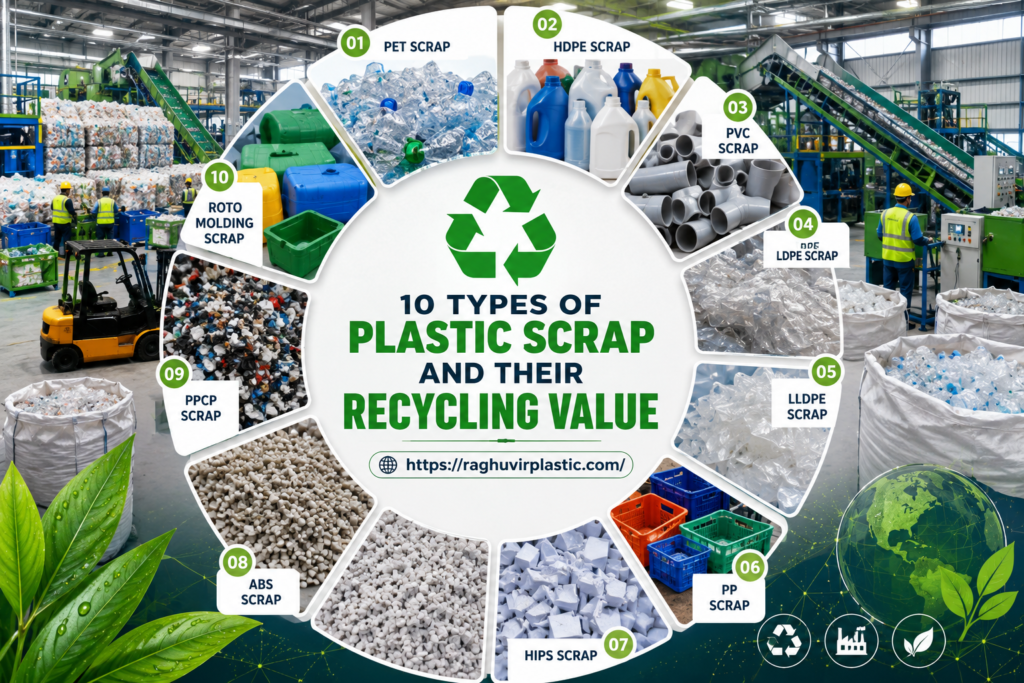
In this guide, we will explore ten common types of plastic scrap and examine their recycling value, uses, and importance in the recycling industry.
Why Plastic Scrap Has High Recycling Value
The value of plastic scrap comes from its ability to be reused multiple times in manufacturing processes. Recycling helps reduce landfill waste, conserve natural resources, decrease energy consumption, and lower production costs.
Several factors determine the recycling value of plastic scrap:
- Material quality
- Purity level
- Market demand
- Ease of processing
- Availability of supply
- End-product applications
When properly sorted and processed, plastic scrap can become a reliable source of raw material for numerous industries.
1. PET (Polyethylene Terephthalate) Scrap
PET is one of the most widely recycled plastics in the world. It is commonly found in water bottles, beverage containers, food packaging, and household product containers.
PET scrap has strong recycling value because it is easy to collect, process, and convert into reusable materials. Recycled PET can be used to manufacture new bottles, polyester fibers, carpets, packaging materials, and textile products.
Industries favor PET recycling because it helps reduce plastic waste while producing high-quality recycled materials. Clean and transparent PET scrap generally commands higher market prices due to its broad industrial demand.
2. HDPE (High-Density Polyethylene) Scrap
HDPE is known for its durability, strength, and resistance to chemicals. It is commonly used in milk containers, detergent bottles, industrial drums, pipes, and storage tanks.
HDPE scrap has excellent recycling value because it can be processed into various products such as plastic lumber, piping systems, crates, pallets, containers, and construction materials.
The recycling process for HDPE is relatively efficient, making it one of the most sought-after materials in the plastic recycling industry. Clean HDPE scrap often generates strong demand among manufacturers looking for reliable recycled raw materials.
3. PVC (Polyvinyl Chloride) Scrap
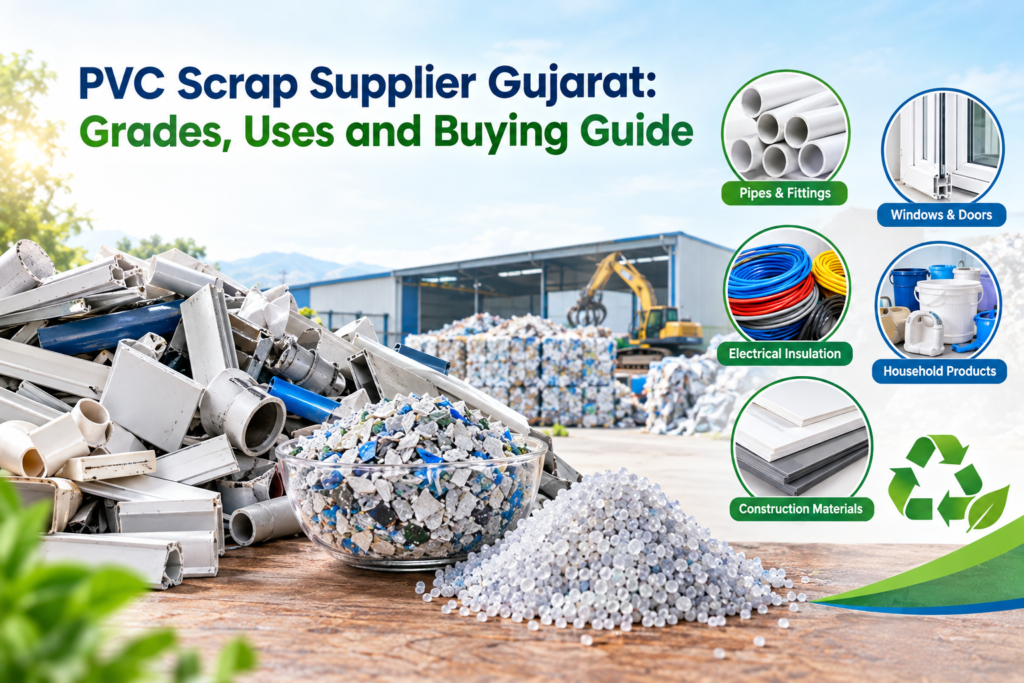
PVC is widely used in construction and infrastructure applications. Common PVC products include pipes, window frames, electrical cable insulation, flooring materials, and wall coverings.
PVC scrap possesses significant recycling value due to its durability and versatility. Recycled PVC can be used to produce new pipes, flooring products, fencing materials, traffic barriers, and industrial components.
Although PVC recycling requires specialized handling because of its chemical composition, advancements in recycling technology have improved its recoverability and market value.
4. LDPE (Low-Density Polyethylene) Scrap
LDPE is commonly used in plastic bags, packaging films, flexible containers, and shrink wraps. Its flexibility and lightweight characteristics make it popular across multiple industries.
LDPE scrap has growing recycling value as businesses seek sustainable alternatives for packaging materials. Recycled LDPE is often used to manufacture garbage bags, agricultural films, shipping envelopes, and flexible packaging products.
As demand for recycled packaging materials continues to rise, LDPE remains an important category within the plastic scrap market.
5. LLDPE (Linear Low-Density Polyethylene) Scrap
LLDPE is widely used in stretch films, industrial packaging, agricultural covers, and heavy-duty liners. It offers excellent tensile strength and flexibility.
The recycling value of LLDPE scrap is increasing because industries are actively looking for cost-effective and sustainable packaging solutions. Recycled LLDPE can be transformed into industrial films, liners, containers, and protective packaging materials.
Properly sorted LLDPE scrap often attracts strong market demand due to its performance characteristics and wide range of applications.
6. PP (Polypropylene) Scrap
Polypropylene is one of the most versatile plastic materials used today. It is commonly found in automotive components, food containers, furniture, crates, household products, and industrial packaging.
PP scrap holds substantial recycling value because of its durability, heat resistance, and versatility. Recycled polypropylene is used in manufacturing automotive parts, storage bins, pallets, containers, and consumer goods.
The increasing adoption of recycled polypropylene in industrial production has contributed to its strong position in the plastic scrap market.
7. HIPS (High Impact Polystyrene) Scrap
HIPS is known for its impact resistance and ease of processing. It is commonly used in appliance housings, electronic products, packaging trays, and display materials.
HIPS scrap is valued in the recycling industry because it can be efficiently processed into reusable plastic products. Recycled HIPS is often used in manufacturing packaging components, office products, construction materials, and consumer goods.
The material’s balance of strength and workability makes it attractive for various recycling applications.
8. ABS (Acrylonitrile Butadiene Styrene) Scrap
ABS is a high-performance engineering plastic widely used in automotive components, electronics, machinery housings, and consumer products.
ABS scrap possesses excellent recycling value due to its strength, toughness, and durability. Recycled ABS is commonly used in manufacturing automotive parts, industrial equipment, electronic housings, and plastic accessories.
Because of its engineering-grade properties, ABS scrap often commands higher market value compared to many standard plastic materials.
9. PPCP (Polypropylene Copolymer) Scrap
PPCP is widely used in automotive components, industrial containers, household products, and molded plastic parts. It combines strength with improved impact resistance.
The recycling value of PPCP scrap continues to increase as manufacturers seek durable recycled materials for industrial applications. Recycled PPCP can be used in automotive components, storage products, industrial packaging, and molded goods.
Its versatility and performance characteristics contribute significantly to its demand within the recycling sector.
10. Roto Molding Plastic Scrap
Roto molding plastics are used to manufacture large hollow products such as water tanks, chemical containers, playground equipment, and industrial storage systems.
Roto molding scrap is highly valuable because it can be reprocessed into various rotationally molded products. Recycled roto molding material supports sustainable manufacturing while reducing raw material costs.
As demand for large plastic products grows, the recycling value of roto molding scrap continues to expand.
Factors That Influence Plastic Scrap Prices
Plastic scrap prices are influenced by several market factors. Understanding these factors helps businesses maximize the value of recyclable materials.
Key pricing factors include:
- Material type
- Purity and contamination levels
- Color consistency
- Market demand
- Quantity available
- Processing requirements
- Transportation costs
- Global recycling trends
Higher-quality and cleaner plastic scrap generally achieves better market value and attracts more buyers.
Benefits of Recycling Plastic Scrap
Recycling plastic scrap provides numerous economic and environmental benefits.
Environmental advantages include:
- Reduced landfill waste
- Lower carbon emissions
- Conservation of natural resources
- Reduced plastic pollution
- Support for circular economy initiatives
Business advantages include:
- Lower raw material costs
- Increased resource efficiency
- Improved sustainability performance
- Enhanced corporate reputation
- Greater supply chain stability
These benefits make plastic recycling a critical component of modern manufacturing.
How Businesses Can Choose the Right Plastic Scrap Supplier
Selecting the right plastic scrap supplier is essential for ensuring consistent material quality and supply reliability.
Businesses should consider:
- Material quality standards
- Product consistency
- Sorting and grading practices
- Supply capacity
- Industry experience
- Customer support
- Transparency in operations
Reliable suppliers help manufacturers achieve production efficiency while maintaining quality standards.
The Growing Future of Plastic Recycling in India
India’s recycling industry continues to experience rapid growth as environmental awareness and industrial demand increase. Government initiatives, technological advancements, and corporate sustainability programs are encouraging greater investment in recycling infrastructure.
The demand for recycled plastics is expected to rise significantly across packaging, automotive, construction, agriculture, and consumer goods industries. As a result, the value of plastic scrap materials will continue to grow.
Companies involved in plastic scrap trading and recycling play a crucial role in building a more sustainable and resource-efficient future.
Conclusion
Plastic scrap is a valuable resource that supports both economic growth and environmental sustainability. Materials such as PET, HDPE, PVC, LDPE, LLDPE, PP, HIPS, ABS, PPCP, and roto molding plastics each offer unique recycling value and industrial applications.
As industries increasingly adopt recycled materials, understanding the characteristics and value of different plastic scrap types becomes more important than ever. By investing in proper recycling practices and sourcing quality recycled materials, businesses can reduce costs, improve sustainability, and contribute to a cleaner future.
For manufacturers, recyclers, and industrial buyers, plastic scrap is no longer waste—it is an essential resource driving the circular economy forward.