

Introduction
Industrial plastic regrind has become an important material option for manufacturers, recyclers, plastic processors and businesses involved in industrial production. As industries continue to focus on material recovery and efficient resource utilization, properly processed plastic regrind can provide a practical source of recycled material for suitable manufacturing applications.
For businesses searching for Industrial Plastic Regrind, selecting the right polymer, material form, quality and supply quantity is essential. Plastic regrind is available in different polymer categories, including HDPE, PP, LDPE and other industrial plastics. Each material has different characteristics and should be selected according to the intended application and processing requirements.
Gujarat is one of India’s important industrial and manufacturing markets, with strong activity in plastics, engineering, packaging, molding, extrusion, recycling and other industries. Manufacturers across Rajkot, Ahmedabad, Surat, Vadodara, Morbi, Jamnagar, Bharuch, Vapi and other industrial areas require reliable sources of plastic materials for their production activities.
Raghuvir Plastic serves the industrial plastic material market from Rajkot, Gujarat, providing plastic scrap and recycled material options for manufacturers, processors and recycling businesses. The company focuses on commercially useful plastic materials and works with customers looking for suitable material categories for industrial requirements.
What Is Industrial Plastic Regrind?
Industrial Plastic Regrind is plastic material that has been mechanically processed by grinding or shredding suitable plastic products, components, production scrap, rejected parts, runners, offcuts or other recoverable plastic materials into smaller pieces.
The grinding process changes larger plastic items into a more manageable material form. Depending on the source and processing method, the resulting regrind can vary in size, colour, polymer type and physical characteristics.
Industrial plastic regrind may originate from manufacturing processes where plastic components, runners or production offcuts are generated. Suitable plastic products can also enter recycling and recovery streams before being sorted and processed into regrind.
The main purpose of regrinding is to prepare suitable plastic material for easier handling, storage, transportation, further processing and potential reuse.
However, plastic regrind is not one uniform material. Industrial Plastic Regrind can include different polymer categories, and each category should be kept properly separated to help maintain material consistency.
For example, HDPE regrind and PP regrind have different material characteristics. LDPE regrind is also different from rigid HDPE or polypropylene materials. Therefore, manufacturers should identify the required polymer before purchasing recycled plastic material.
Why Industrial Plastic Regrind Is Important
Modern manufacturing increasingly considers how materials can be recovered, processed and reused. Plastic regrind plays an important role in this wider material recovery process.
When suitable industrial plastic is collected and processed correctly, it can become a useful material resource rather than remaining unused production waste.
A typical material recovery process can be represented as:
Plastic Products or Production Scrap → Collection → Sorting → Grinding → Industrial Plastic Regrind → Further Processing → Manufacturing
This process can support better utilization of suitable plastic materials.
For manufacturers, recycled regrind can be considered alongside other raw material options when it meets their technical and production requirements. The suitability of a particular material depends on factors such as polymer type, source, cleanliness, colour, particle size and intended application.
Businesses should therefore evaluate Industrial Plastic Regrind based on their actual production requirements rather than selecting material only according to price.
Types of Industrial Plastic Regrind
Industrial plastic regrind is available in several polymer categories. At Raghuvir Plastic, businesses can discuss different plastic material requirements depending on availability and application.
HDPE Industrial Regrind
HDPE, or High-Density Polyethylene, is widely used in containers, industrial products, packaging and various molded applications.
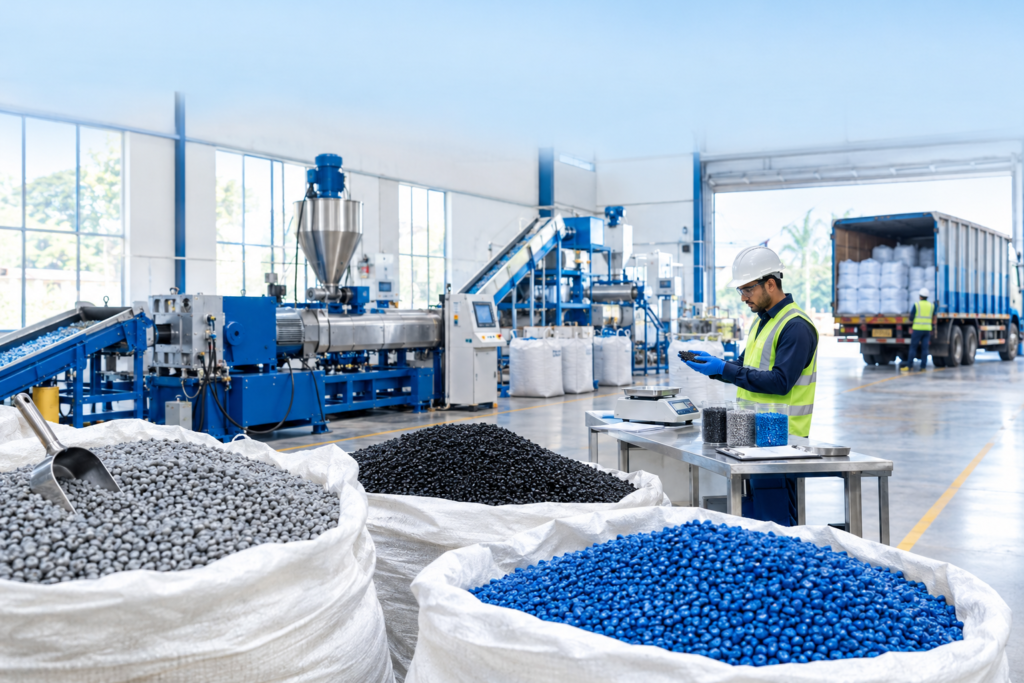
Suitable HDPE materials can be collected and processed into regrind. Depending on the source, HDPE regrind may be available in natural, white, blue, black or other sorted colours.
Manufacturers searching for HDPE Industrial Plastic Regrind should consider the material source, colour, cleanliness, size and intended application.
Properly identified HDPE regrind can be useful for suitable recycling, processing and manufacturing operations.
PP Industrial Regrind
Polypropylene, commonly known as PP, is another important polymer used across the manufacturing sector.
PP materials can originate from industrial components, molded products, production runners, rejected parts and other suitable sources. These materials can be mechanically processed to create PP regrind.
PP Industrial Plastic Regrind may be considered by manufacturers and processors involved in injection molding, recycling and other suitable plastic applications.
As with other recycled materials, the exact characteristics of PP regrind depend on its source and processing history.
LDPE Industrial Regrind
LDPE, or Low-Density Polyethylene, is commonly associated with flexible plastic products and films.
Suitable LDPE materials can be collected, sorted and processed into regrind for appropriate industrial applications.
Businesses searching for LDPE Industrial Plastic Regrind should consider factors such as source material, cleanliness, colour and material consistency.
LDPE regrind can be particularly relevant for businesses working with flexible plastic materials and recycling processes.
Other Industrial Plastic Regrind
Depending on availability and customer requirements, industrial plastic regrind can also include other polymer categories such as:
- LLDPE
- PVC
- PET
- ABS
- HIPS
- PPCP
- Roto molding materials
- Other suitable industrial polymers
Each polymer has its own processing characteristics. Manufacturers should therefore avoid treating all recycled plastic regrind as interchangeable material.
How Industrial Plastic Regrind Is Produced
Producing quality Industrial Plastic Regrind involves several important stages.
Material Collection
Suitable plastic material is collected from industrial production, manufacturing operations, rejected components, plastic products or other recovery sources.
Material Sorting
The collected material is sorted according to polymer type, colour, source and other relevant characteristics.
Sorting is important because different polymers can behave differently during processing.
Size Reduction
The sorted plastic material is processed through grinding or shredding equipment. This reduces larger components into smaller pieces.
Quality Inspection
After grinding, the material can be inspected for visible contamination, unwanted materials, colour consistency and other relevant characteristics.
Packaging
Processed regrind can then be stored in bags, bulk containers or other suitable packaging for transportation and industrial use.
This structured approach helps turn suitable plastic materials into a more manageable recycled material form.
Importance of Sorting Industrial Plastic Regrind
Sorting is one of the most important aspects of recycled plastic material handling.
Different polymers have different melting behaviour, processing characteristics and performance properties. If incompatible materials are mixed, the resulting material may not meet the requirements of a particular manufacturing process.
For example, a manufacturer specifically purchasing PP regrind generally needs properly identified polypropylene material rather than an unidentified mixed-plastic stream.
Similarly, a customer requiring HDPE regrind should be able to distinguish it from PP, LDPE, PVC or other materials.
Professional sorting can therefore help manufacturers make better purchasing decisions.
When looking for an Industrial Plastic Regrind Supplier, businesses should ask about the material category, source, sorting process and available material specifications.
Applications of Industrial Plastic Regrind
The applications of plastic regrind depend on the polymer type and material characteristics.
Suitable applications may include:
Injection Molding
Some recycled regrind materials may be used in suitable injection molding applications depending on the required product specifications and processing conditions.
Extrusion
Certain plastic regrind materials can be processed through extrusion systems when the material characteristics are appropriate.
Plastic Component Manufacturing
Industrial manufacturers may use suitable recycled plastic materials for producing components and products.
Recycling Operations
Regrind can serve as an intermediate material in recycling operations and may undergo additional processing.
Compounding
Suitable plastic materials can potentially be used in compounding operations where material properties and formulation requirements allow.
Industrial Product Manufacturing
Depending on polymer type and specifications, recycled regrind can support manufacturing of various industrial products.
The exact application should always be determined by the manufacturer’s technical requirements.
Benefits of Using Industrial Plastic Regrind
There are several reasons why manufacturers and recyclers consider recycled plastic regrind.
Material Recovery
Industrial plastic regrind supports the recovery of suitable plastic materials that might otherwise remain unused.
Recycled Material Availability
Manufacturers can access recycled material categories such as HDPE, PP and LDPE depending on market availability.
Supports Circular Manufacturing
Using suitable recovered plastic materials contributes to a broader circular material flow.
Bulk Procurement
Industrial businesses often require larger quantities of material. Bulk procurement can help companies plan their material inventory.
Efficient Material Handling
Ground plastic material is generally easier to store and handle than large discarded components.
Multiple Material Options
Businesses can source different polymer categories depending on their manufacturing requirements.
However, the benefits depend on selecting material that is technically suitable for the intended application.
Choosing the Right Industrial Plastic Regrind
Selecting the right Industrial Plastic Regrind requires more than identifying a low-cost supplier.
Manufacturers should consider several factors.
Polymer Type
First identify whether the production process requires HDPE, PP, LDPE or another polymer.
Material Source
Understanding where the material originated can provide useful information about its characteristics.
Colour
Colour requirements can be important when manufacturing products with specific appearance requirements.
Particle Size
The size and consistency of regrind can affect handling and processing.
Cleanliness
Material should be evaluated for unwanted contamination or incompatible materials.
Intended Application
The final application should always be considered before selecting recycled material.
Quantity
Businesses should communicate their required volume to the supplier so that bulk supply can be discussed.
Industrial Plastic Regrind Supplier Gujarat
Gujarat has a large and diverse industrial ecosystem. Plastic manufacturers, molding companies, recycling businesses, packaging manufacturers and processors operate throughout the state.
This creates demand for industrial plastic raw materials and recycled materials.
Companies searching for an Industrial Plastic Regrind Supplier Gujarat may be looking for material close to their manufacturing location, reliable supply quantities and appropriate polymer categories.
Important industrial markets include Rajkot, Ahmedabad, Surat, Vadodara, Morbi, Jamnagar, Bharuch and Vapi.
Each region has businesses with different material requirements.
For example, engineering and manufacturing companies may have requirements for injection molding materials, while packaging and recycling companies may require different polymer categories.
A supplier serving Gujarat’s industrial market should therefore understand that every customer can have different material requirements.
Industrial Plastic Regrind Supplier in Rajkot
Rajkot is an established industrial centre in Gujarat with businesses involved in engineering, manufacturing, machinery, automotive components and plastic-related activities.
Raghuvir Plastic is based in Rajkot and works with businesses searching for industrial plastic materials and recycled plastic options.
Customers looking for an Industrial Plastic Regrind Supplier in Rajkot can communicate their requirements directly, including polymer type, colour, quantity and intended application.
A local Rajkot supplier can also make communication and procurement discussions more convenient for businesses located in the city and surrounding industrial areas.
Bulk Industrial Plastic Regrind Supply
Manufacturing businesses often require raw materials in larger quantities. Production schedules can depend on the availability of appropriate materials.
A Bulk Industrial Plastic Regrind Supplier should be able to discuss material availability, quantity requirements and delivery arrangements with industrial customers.
Bulk purchasing may be relevant for:
- Manufacturing facilities
- Plastic processors
- Recycling companies
- Injection molding businesses
- Extrusion operations
- Compounding businesses
- Industrial product manufacturers
Before ordering in bulk, customers should confirm the material type and ensure that it is appropriate for their intended process.
Industrial Plastic Regrind for Manufacturers
Manufacturers are an important part of the recycled plastic supply chain.
A manufacturer may use Industrial Plastic Regrind as part of its material input depending on product specifications, processing conditions and quality requirements.
Before purchasing, manufacturers should communicate:
Required polymer: HDPE, PP, LDPE or another material.
Required quantity: The approximate quantity needed for production.
Application: The type of product or process for which the material will be considered.
Colour: Natural, white, black, blue or another preferred colour.
Material form: Regrind, flakes, granules or another required form.
Providing this information allows the supplier to understand the customer’s requirements more clearly.
Industrial Plastic Regrind and the Circular Economy
The circular economy aims to keep valuable resources in use through recovery, reuse and recycling.
Plastic regrind represents one part of this process.
Instead of treating suitable industrial plastic materials as unusable waste, businesses can collect, sort and process them into materials that may be suitable for further industrial use.
A simplified circular material flow is:
Industrial Plastic → Recovery → Sorting → Grinding → Regrind → Processing → New Products
This approach supports material recovery and can help create a connection between recycling and manufacturing.
The quality and suitability of recycled material remain important. Proper sorting and processing are necessary to ensure that the material can be evaluated for appropriate applications.
Difference Between Plastic Scrap and Plastic Regrind
Plastic scrap and plastic regrind are related but not exactly the same.
Plastic scrap generally refers to surplus, rejected, discarded or recoverable plastic material before or after processing.
Plastic regrind refers specifically to plastic that has been mechanically reduced in size through grinding or shredding.
For example, a large plastic production component may initially be considered industrial plastic scrap. After grinding, it can become plastic regrind.
This distinction can be useful for manufacturers when communicating their material requirements to suppliers.
If a business requires material that has already been ground into smaller pieces, it should specifically ask for Industrial Plastic Regrind.
Factors Affecting Industrial Plastic Regrind Quality
The characteristics of recycled regrind can vary depending on several factors.
Original Material
The source plastic can influence the final regrind characteristics.
Polymer Identification
Correct polymer identification is important for maintaining material consistency.
Sorting
Proper sorting can help reduce unwanted material mixing.
Processing
Grinding and handling methods can influence particle size and consistency.
Storage
Appropriate storage helps protect material from unnecessary contamination or environmental exposure.
Handling
Careful transportation and packaging can help preserve the condition of the material before it reaches the customer.
For industrial buyers, discussing these factors with the supplier can help establish realistic expectations.
How to Buy Industrial Plastic Regrind
Businesses planning to purchase Industrial Plastic Regrind can follow a straightforward sourcing process.
First, identify the polymer required for the manufacturing application.
Next, determine the quantity required for regular or one-time production.
Then communicate the colour, material form and intended application to the supplier.
Customers should also discuss available material categories, packaging, commercial terms and delivery requirements.
For bulk purchases, businesses can coordinate material requirements with the supplier before confirming an order.
This approach can help manufacturers avoid purchasing unsuitable recycled material.
Why Work With Raghuvir Plastic?
Raghuvir Plastic operates in the industrial plastic material sector from Rajkot, Gujarat.
The company serves businesses involved in manufacturing, plastic processing and recycling and provides access to different plastic material categories depending on availability and customer requirements.
For businesses searching for Industrial Plastic Regrind Gujarat, the company can discuss requirements related to polymer type, quantity, colour and application.
Raghuvir Plastic’s Gujarat-focused market presence allows it to serve customers looking for industrial plastic material options within the region.
Businesses can communicate their requirements directly and discuss available material categories for their specific operations.
Industrial Plastic Regrind for Gujarat Industries
Gujarat’s diverse industrial economy creates demand for many types of plastic materials.
Industries involved in engineering, packaging, automotive components, consumer products, industrial manufacturing and recycling may require plastic materials for different purposes.
This makes reliable material sourcing an important part of production planning.
A manufacturer in Rajkot may have different requirements from a plastic processor in Ahmedabad or an industrial business in Surat. Similarly, companies in Vadodara, Morbi, Jamnagar, Bharuch and Vapi may require different polymer categories.
A professional Industrial Plastic Regrind Supplier should therefore approach material supply according to the customer’s application instead of offering one generic material to every buyer.
Questions to Ask Your Industrial Plastic Regrind Supplier
Before purchasing, buyers should ask practical questions.
What polymer is the regrind made from?
This confirms whether the material matches the intended application.
What is the material source?
Understanding the source can help buyers evaluate the material.
What colours are available?
Colour can be important for some production applications.
What quantity is available?
This is particularly important for manufacturers requiring regular bulk supply.
What is the regrind size or form?
The physical form can affect handling and processing.
How is the material packaged?
Packaging should be suitable for transportation and storage.
Can the material be supplied to my Gujarat location?
Customers should discuss delivery requirements before ordering.
Clear communication between buyer and supplier can make industrial procurement more efficient.
Future of Recycled Plastic Materials
The demand for recovered and recycled materials is expected to remain relevant as manufacturers continue exploring ways to improve material utilization.
Plastic recycling connects waste recovery with manufacturing and creates opportunities for suitable plastic materials to re-enter industrial supply chains.
Industrial Plastic Regrind can be an important intermediate material in this process.
Manufacturers are likely to continue evaluating recycled materials based on quality, availability, consistency and application suitability.
For suppliers, maintaining clear material identification and professional handling will remain important.
For buyers, understanding their own production requirements will help them select more appropriate recycled material options.
Conclusion
Industrial Plastic Regrind is an important material category within the modern plastic recycling and manufacturing supply chain. By processing suitable plastic scrap through grinding and sorting, businesses can create a more manageable recycled material form for appropriate industrial applications.
HDPE, PP, LDPE and other polymer categories can be available as regrind depending on material sources and market availability. Each polymer should be evaluated separately according to the intended application, processing requirements and material specifications.
For manufacturers and recyclers in Gujarat, selecting an experienced supplier can simplify the process of sourcing recycled plastic materials.
Raghuvir Plastic, based in Rajkot, Gujarat, serves industrial customers looking for plastic scrap, recycled plastic materials and regrind options. The company works with manufacturers, processors and recyclers across the Gujarat industrial market.
Businesses searching for an Industrial Plastic Regrind Supplier Gujarat, Industrial Plastic Regrind Supplier, HDPE Regrind, PP Regrind, LDPE Regrind, or Bulk Industrial Plastic Regrind should clearly communicate their polymer, quantity, colour and application requirements before purchasing.
The right approach to recycled plastic sourcing combines material identification, proper sorting, suitable processing, reliable supply and clear communication. When these factors are considered together, industrial plastic regrind can become a valuable material option for suitable manufacturing and recycling applications.