
Introduction
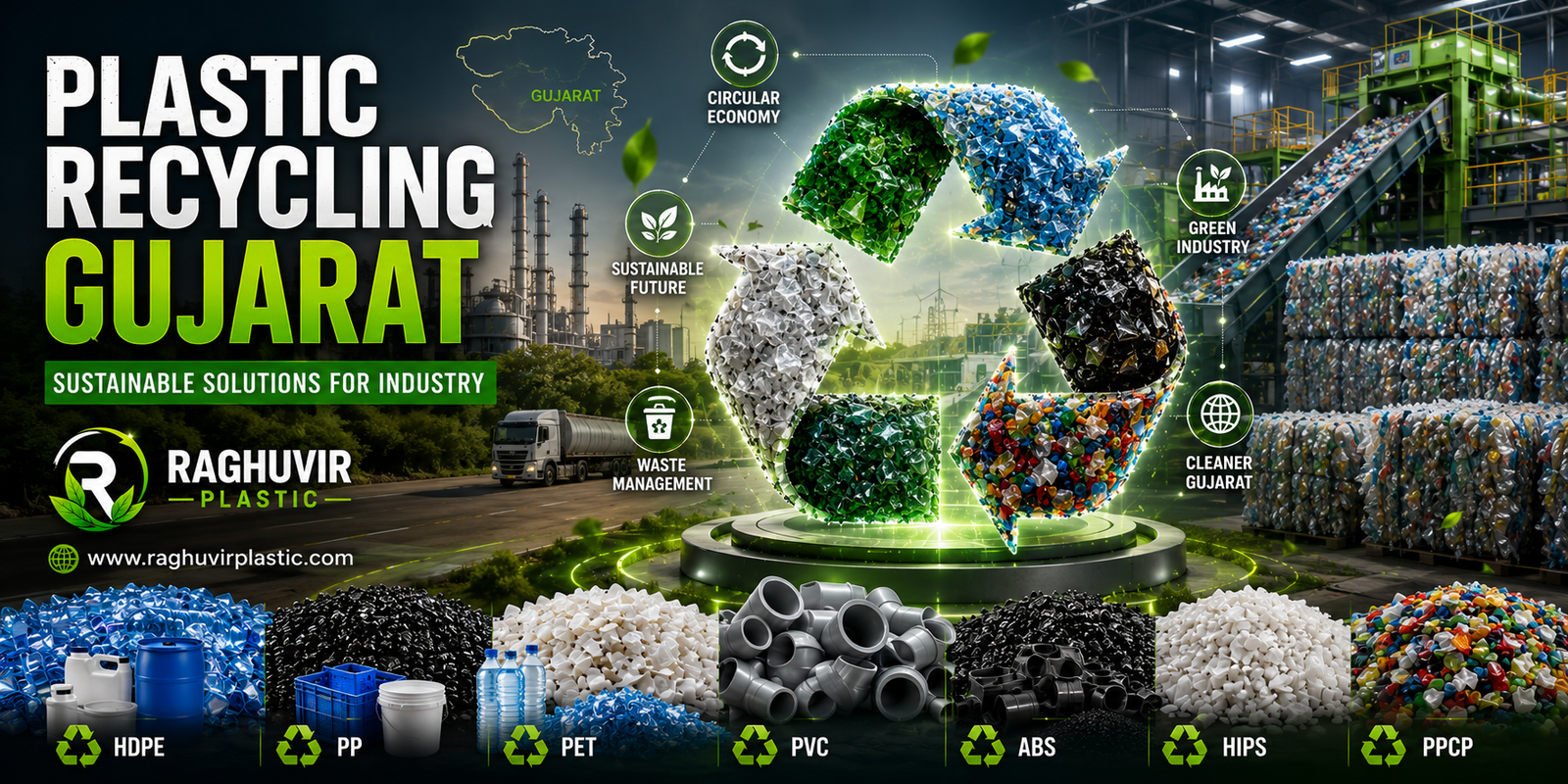
Plastic Recycling Gujarat has become a critical part of the state’s industrial and environmental development. As Gujarat continues to grow as one of India’s leading manufacturing hubs, the demand for sustainable waste management and recycled raw materials is increasing rapidly.
Industries across packaging, automotive, construction, agriculture, and consumer goods sectors are adopting recycled plastic materials to reduce costs, improve sustainability, and support environmentally responsible manufacturing. Recycling not only helps businesses optimize resources but also plays a significant role in reducing plastic pollution and landfill waste.
Today, recycling has evolved from a waste management activity into an essential component of the circular economy, helping industries transform discarded materials into valuable resources.
Understanding Plastic Recycling
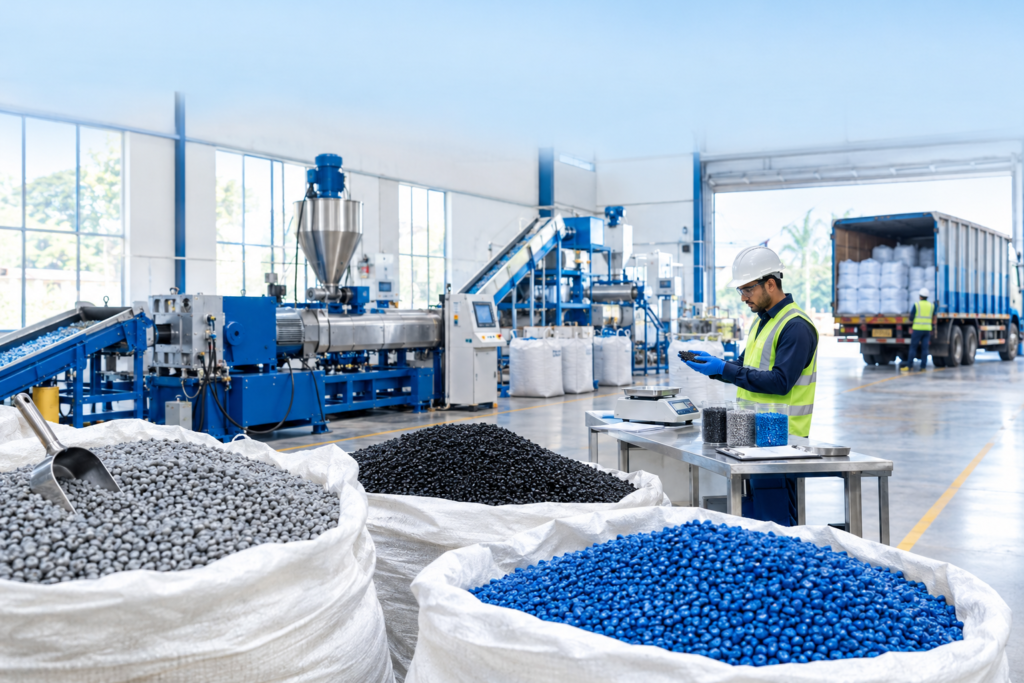
Plastic recycling is the process of collecting, sorting, cleaning, processing, and converting used plastic materials into reusable raw materials. These materials can then be used to manufacture new products instead of relying entirely on virgin plastics.
The process helps reduce environmental impact while supporting industrial growth. Modern recycling facilities use advanced technologies to improve material recovery rates and produce high-quality recycled plastic suitable for various industrial applications.
Why Gujarat Is Emerging as a Recycling Hub
Gujarat has established itself as one of India’s strongest industrial states. The presence of manufacturing units, petrochemical industries, export businesses, and infrastructure development projects has created substantial demand for recycled materials.
Several factors contribute to Gujarat’s leadership in recycling:
- Strong industrial ecosystem
- Growing sustainability awareness
- Expanding manufacturing sector
- Increasing demand for recycled raw materials
- Support for circular economy initiatives
- Development of waste management infrastructure
These factors have helped position the state as an important center for recycling and resource recovery.
Importance of Recycling Plastic Waste
Plastic waste is one of the most significant environmental challenges facing modern society. Improper disposal can result in pollution of land, water bodies, and ecosystems.
Recycling offers an effective solution by recovering valuable materials that would otherwise be discarded. Benefits include:
Reduced Landfill Waste
Recycling diverts large quantities of plastic from landfills and waste disposal sites.
Conservation of Natural Resources
Using recycled materials reduces the need for virgin raw materials and conserves valuable resources.
Lower Carbon Emissions
Manufacturing products from recycled plastics generally requires less energy than producing new plastics.
Environmental Protection
Recycling helps reduce pollution and supports cleaner communities.
Economic Benefits
Recycling creates business opportunities, supports manufacturing, and contributes to industrial growth.
Common Plastic Materials Recycled in Gujarat
HDPE Scrap
High-Density Polyethylene is widely used in industrial containers, drums, storage tanks, detergent bottles, and piping systems.
Recycled HDPE is commonly used for:
- Plastic pallets
- Industrial containers
- Construction materials
- Water storage products
- Agricultural applications
PP Scrap
Polypropylene is known for its strength and versatility.
Applications include:
- Automotive components
- Packaging products
- Industrial crates
- Storage containers
- Consumer goods
PET Scrap
PET is one of the most recycled plastics globally.
Recycled PET is used in:
- Textile fibers
- Packaging materials
- Beverage containers
- Polyester products
- Industrial applications
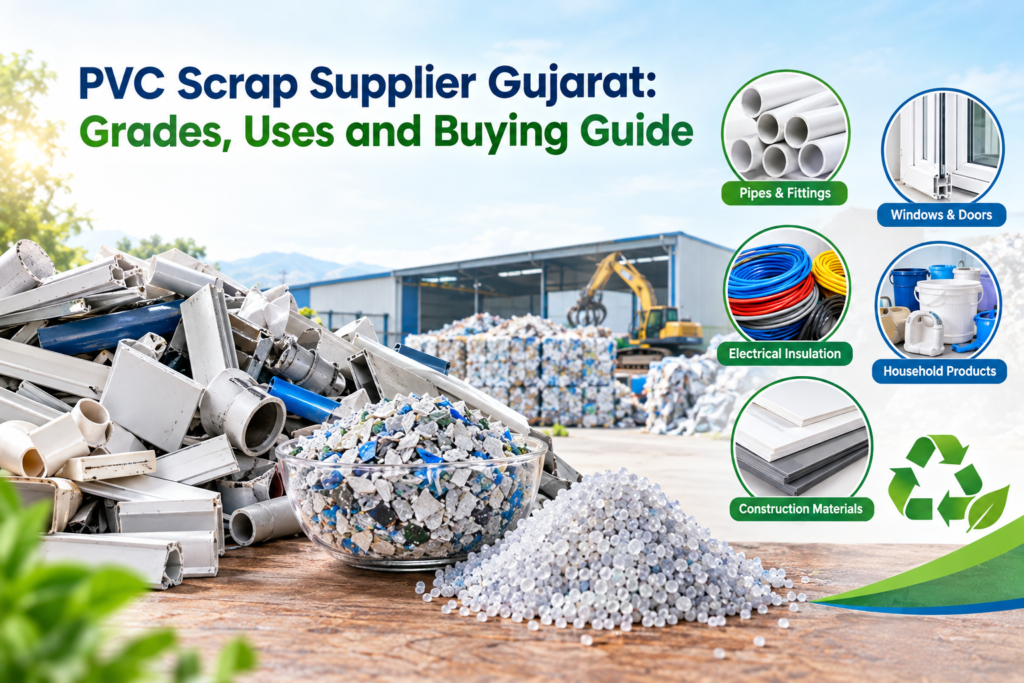
PVC Scrap
PVC recycling supports construction and infrastructure sectors.
Common uses include:
- Pipes
- Flooring materials
- Electrical insulation
- Fencing products
- Building materials
ABS Scrap
ABS is a durable engineering plastic used in automotive and electronic industries.
Applications include:
- Machine components
- Electronic housings
- Automotive parts
- Industrial products
HIPS Scrap
High Impact Polystyrene offers strength and processing flexibility.
Recycled HIPS supports:
- Packaging solutions
- Consumer products
- Display materials
- Appliance components
PPCP Scrap
Polypropylene Copolymer combines strength with impact resistance.
Industries use recycled PPCP for:
- Industrial containers
- Automotive applications
- Molded products
- Storage solutions
Plastic Recycling Process
Collection
Plastic waste is collected from industries, commercial establishments, and recycling channels.
Sorting
Materials are separated according to polymer type, color, and quality.
Cleaning
Contaminants are removed to improve recycling efficiency.
Shredding
Materials are processed into flakes or smaller pieces.
Reprocessing
The plastic is melted and converted into reusable raw materials.
Manufacturing
Recycled materials are used to create new products for industrial and commercial applications.
Industrial Applications of Recycled Plastics
Recycled materials are increasingly used across various industries.
Packaging Industry
Manufacturers use recycled plastics for containers, films, and packaging products.
Automotive Industry
Vehicle components often incorporate recycled materials.
Construction Industry
Recycled plastics are used in pipes, panels, insulation products, and infrastructure applications.
Agriculture Industry
Agricultural films, irrigation products, and storage systems frequently use recycled plastics.
Consumer Goods Industry
Furniture, household products, and storage solutions often contain recycled content.
Environmental Impact of Recycling
Recycling contributes significantly to environmental sustainability.
Positive impacts include:
- Reduced plastic pollution
- Lower greenhouse gas emissions
- Conservation of petroleum resources
- Improved waste management
- Support for circular economy systems
These benefits help industries achieve sustainability objectives while maintaining operational efficiency.
Role of Businesses in Sustainable Recycling
Businesses play a crucial role in promoting recycling and responsible resource management.
Organizations can support sustainability by:
- Adopting recycled materials
- Improving waste segregation
- Partnering with reliable recyclers
- Investing in sustainable practices
- Supporting circular economy initiatives
These efforts contribute to long-term environmental and economic benefits.
Future of Recycling in Gujarat
The future of recycling in Gujarat looks promising. Growing industrial demand, environmental awareness, and technological innovation continue to drive the industry forward.
Emerging trends include:
- Advanced recycling technologies
- Improved sorting systems
- Greater use of recycled materials
- Sustainable manufacturing initiatives
- Increased corporate sustainability commitments
As industries continue to prioritize environmental responsibility, recycling will remain an essential part of Gujarat’s industrial ecosystem.
Why Choose Raghuvir Plastic
Raghuvir Plastic is committed to delivering high-quality recycled plastic materials that support sustainable manufacturing and responsible resource management.
The company specializes in supplying various plastic scrap materials including HDPE, PP, PET, PVC, ABS, HIPS, PPCP, and other recyclable plastics. Through quality-focused operations and environmentally responsible practices, Raghuvir Plastic helps industries reduce waste while supporting the circular economy.
Conclusion
Plastic Recycling Gujarat is playing a vital role in creating a cleaner environment and supporting sustainable industrial growth. By transforming plastic waste into valuable raw materials, recycling helps conserve resources, reduce pollution, and strengthen the circular economy.
As Gujarat continues to expand as a manufacturing powerhouse, the importance of recycling will only increase. Businesses that embrace recycled materials today are helping build a more sustainable future for tomorrow while contributing to responsible environmental stewardship and long-term industrial success.