

Introduction
Plastic is one of the most widely used materials in modern manufacturing. From packaging and containers to automotive components, industrial products and household items, plastic plays an important role in many industries. As manufacturers and recyclers look for better ways to recover useful materials, plastic regrind has become an important part of the recycling and material-recovery process.
But what is plastic regrind and how is it used? Plastic regrind is processed plastic material that has been mechanically reduced into smaller pieces through processes such as grinding or shredding. Depending on its source and polymer type, plastic regrind can be prepared for further recycling, processing or suitable manufacturing applications.
For manufacturers, recyclers and industrial buyers, understanding it can make it easier to select appropriate recycled materials. Different polymers have different characteristics, and the suitability of a particular plastic regrind depends on its polymer type, source, cleanliness, colour, size, grade and intended application.
Raghuvir Plastic, based in Rajkot, Gujarat, operates in the plastic scrap trading and recycling sector and supplies recyclable plastic materials to manufacturers and recyclers across Gujarat. Its material categories include HDPE, PP, LD, LLDPE, PVC, PET, ABS, HIPS, PPCP and Roto Molding scrap.
This guide explains **what plastic regrind is, how plastic regrind is produced, where plastic regrind is used, the major types of plastic regrind, its benefits and what buyers should consider when sourcing recycled plastic materials.
What Is Plastic Regrind?
It is plastic material that has been mechanically processed into smaller pieces. The original plastic may come from manufacturing scrap, rejected molded components, production runners, industrial products, packaging materials or other suitable plastic sources.
Instead of treating suitable plastic as material with no further value, it can be collected, sorted and mechanically processed. Grinding or shredding reduces larger plastic pieces into smaller particles that are easier to handle and prepare for further recycling or processing.
The appearance of plastic regrind depends on the original material and the processing method. It may consist of small irregular plastic pieces, flakes, chips or other ground forms.
The important point is that it is not a single type of plastic. HDPE regrind, PP regrind, LDPE regrind, LLDPE regrind, ABS regrind and other materials can have substantially different properties.
Therefore, when a company searches for plastic regrind, it should also identify the specific polymer required for its application.
How Is Plastic Regrind Made?
The production of plastic regrind generally involves several material-handling and processing stages.
A typical process can be understood as:
Plastic Scrap → Identification → Sorting → Cleaning → Grinding/Shredding → Regrind → Further Processing or Manufacturing
The exact process varies according to the type and condition of the incoming plastic material.
1. Collection
Suitable plastic materials are collected from industrial, commercial or manufacturing sources.
The source can influence the quality and characteristics of the final plastic regrind. Production scrap from a controlled manufacturing environment may differ from post-consumer plastic material.
2. Material Identification
The plastic is identified according to its polymer category.
Common categories include:
- HDPE
- PP
- LDPE
- LLDPE
- ABS
- HIPS
- PVC
- PET
- PPCP
Correct identification is important because different polymers should generally be processed according to their own material characteristics.
3. Sorting
After identification, plastic material is sorted into appropriate categories.
Sorting can consider polymer type, colour, source, form and quality.
Proper segregation is particularly important when producing plastic regrind for manufacturing, because unwanted polymer mixing can affect subsequent processing.
4. Cleaning
Depending on the material source, plastic may require cleaning or removal of unwanted contaminants.
Potential contaminants can include dirt, paper, labels, metal pieces or other unwanted materials.
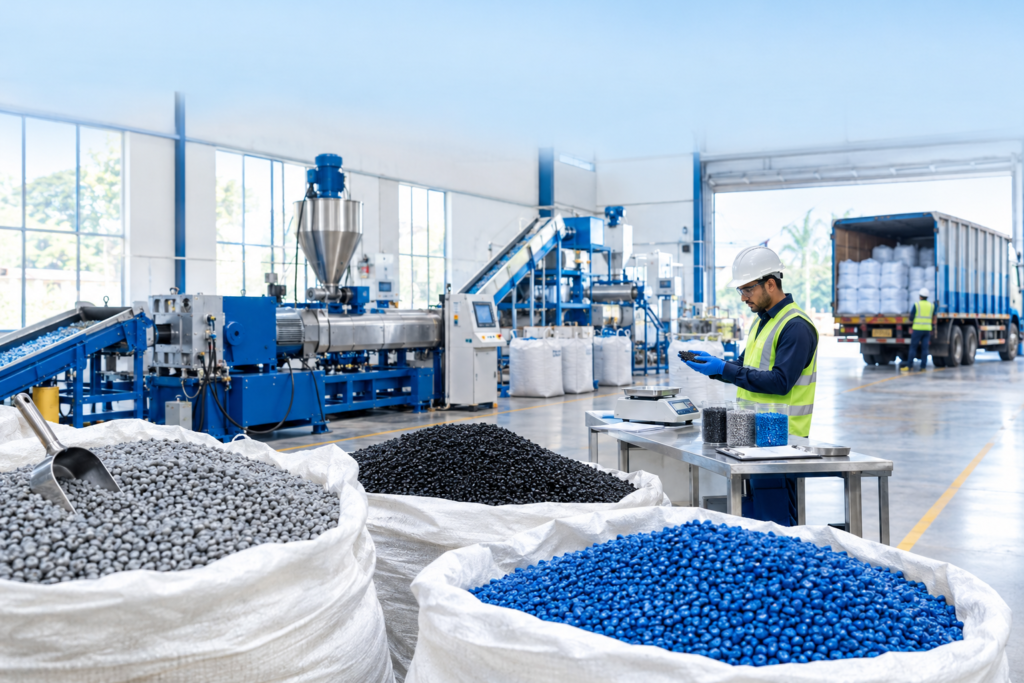
Raghuvir Plastic describes its recycling approach as involving sorting, cleaning, grading, shredding, washing and granulation depending on the material and recycling process.
5. Grinding or Shredding
The sorted plastic is mechanically reduced into smaller pieces.
This is the stage that creates the plastic regrind form.
The size and appearance of the resulting material can depend on the equipment, screen configuration, original plastic product and processing requirements.
6. Quality Checking
The processed material can then be inspected for material type, cleanliness, consistency and other relevant characteristics.
For industrial buyers, quality information is important because recycled materials can vary according to their original source and processing history.
Why Is Plastic Regrind Important?
Plastic regrind has an important role in the broader plastic recycling system.
Mechanical recycling commonly involves sorting, cleaning, shredding and melting plastic without changing the underlying chemical structure of the plastic. The U.S. EPA notes that variability in plastic feedstock can create challenges for achieving consistent properties in recycled plastics.
This is why It should not simply be viewed as ground plastic. Material identification, sorting and quality management are important parts of preparing recycled plastic for appropriate applications.
When suitable plastic material is recovered and processed, it can remain within the manufacturing cycle rather than being immediately treated as waste.
The broader concept can be represented as:
Used Plastic → Collection → Sorting → Processing → Plastic Regrind → Manufacturing → New Products
This supports material recovery and the concept of a circular plastics economy.
Types of Plastic Regrind
There are many types of plastic regrind, and each polymer has different characteristics.
HDPE Plastic Regrind
HDPE stands for High-Density Polyethylene.
HDPE is commonly used in containers, drums, bottles, pipes, crates and industrial products. Raghuvir Plastic already provides HDPE scrap supply and describes its HDPE materials as being sorted and prepared for recycling.
It can be produced by grinding suitable HDPE scrap into smaller pieces.
Depending on the source and grade, HDPE regrind may be used in appropriate recycled-material applications.
Businesses searching for HDPE plastic regrind should consider:
- Polymer identification
- Material source
- Colour
- Cleanliness
- Particle size
- Intended application
- Quantity requirements
PP Plastic Regrind
PP means Polypropylene.
PP is widely used in packaging, crates, containers, automotive components, industrial products, furniture components and molded products.
It is produced by grinding suitable polypropylene scrap or production material.
PP regrind can be valuable for manufacturers and recyclers looking for polypropylene-based recycled material.
The material should be evaluated according to the intended application rather than assuming every PP regrind batch will have identical properties.
LDPE Plastic Regrind
LDPE means Low-Density Polyethylene.
It is widely associated with flexible plastic applications and film-based products.
Suitable LDPE material can be processed into smaller pieces for recycling and further processing.
Raghuvir Plastic’s LD scrap information highlights sorting, consistent supply and preparation for recycling applications.
LDPE plastic regrind may be considered by recycling businesses and manufacturers depending on material characteristics and processing requirements.
LLDPE Plastic Regrind
LLDPE stands for Linear Low-Density Polyethylene.
LLDPE is used in various flexible plastic products and industrial applications.
Raghuvir Plastic specifically handles LLDPE scrap through collection, sorting, cleaning, segregation and recycling preparation.
LLDPE regrind can therefore be an important recycled material category for suitable plastic-processing applications.
ABS Plastic Regrind
ABS is a widely used engineering thermoplastic.
Suitable ABS scrap can be processed into ABS regrind for further recycling and reprocessing.
ABS material may originate from industrial components, molded products and other applications.
Because engineering plastics can have specific performance requirements, buyers should pay attention to grade, source and material consistency when purchasing ABS regrind.
HIPS Plastic Regrind
HIPS stands for High Impact Polystyrene.
HIPS can be found in different industrial and consumer products.
When suitable HIPS material is collected and processed, it can be converted into regrind for appropriate recycling applications.
As with other recycled materials, the exact use depends on the quality and characteristics of the material.
What Is Plastic Regrind Used For?
One of the most common questions after understanding what is plastic regrind is how the material is actually used.
It can be used in several stages of recycling and manufacturing.
Injection Molding
Injection molding is a major plastic manufacturing process.
Suitable recycled plastic regrind can be incorporated into manufacturing processes depending on the polymer, grade and product requirements.
Manufacturers may use recycled material for suitable components, products and industrial parts.
However, the material should be evaluated for the specific molding application before production.
Extrusion
Extrusion converts plastic material into continuous products.
Depending on polymer type and material characteristics, It can be processed through appropriate extrusion systems.
Potential applications may include certain profiles, sheets, pipes and other extruded products.
The suitability depends on the material grade and final-product specifications.
Plastic Compounding
It can also become an input material for compounding operations.
Compounding can involve combining polymer material with other ingredients to achieve particular performance characteristics.
The exact formulation depends on the intended end use.
Recycling and Reprocessing
A major use of plastic regrind is further recycling.
Regrind provides a more manageable feedstock form for subsequent processing.
It may be further processed into flakes, granules, pellets or other recycled material forms depending on the recycling operation.
Industrial Plastic Products
Suitable recycled plastic material can be used in various industrial products.
Potential applications can include:
- Containers
- Crates
- Components
- Industrial bins
- Packaging products
- Automotive-related components
- Household products
- Plastic profiles
- Utility products
The actual application depends on the material and required product specifications.
Benefits of Plastic Regrind
Using plastic regrind can provide several benefits when the material is properly selected.
1. Supports Plastic Recycling
Plastic regrind helps convert suitable plastic material into a form that can be further processed.
This supports the recovery and reuse of plastic materials.
2. Helps Reduce Material Waste
Recovering usable plastic material can reduce the quantity of material that requires disposal.
3. Supports Circular Manufacturing
Plastic regrind can help keep suitable polymer materials within the manufacturing cycle.
4. Provides an Alternative Material Source
For appropriate applications, recycled plastic material can provide an alternative to using only virgin polymer.
5. Available Across Multiple Polymer Categories
Manufacturers can source different regrind categories according to their requirements.
These may include:
HDPE • PP • LDPE • LLDPE • ABS • HIPS
6. Suitable for Bulk Industrial Procurement
Plastic-processing businesses often need significant quantities of material. Properly organized recycled-material supply can support larger industrial procurement requirements.
Plastic Regrind vs Plastic Scrap
Although the terms are sometimes used interchangeably, plastic scrap and plastic regrind are not necessarily the same form of material.
Plastic scrap can refer to a broad range of discarded or surplus plastic materials.
This could include:
- Plastic components
- Production runners
- Film
- Bottles
- Containers
- Lumps
- Industrial parts
- Offcuts
Plastic regrind is generally plastic that has already undergone a grinding or size-reduction process.
Therefore:
Plastic Scrap → Processing → Plastic Regrind
is a simple way to understand the relationship.
Not every piece of plastic scrap is immediately regrind, but suitable plastic scrap can be processed into plastic regrind.
What Factors Affect Plastic Regrind Quality?
Not all plastic regrind is identical.
Several factors can influence its quality and suitability.
Polymer Type
The polymer should be correctly identified.
Mixing different polymers can create processing challenges.
Material Source
Industrial production scrap may have different characteristics from post-consumer material.
Cleanliness
Contamination can affect processing and final-product quality.
Colour
Colour requirements can be important for manufacturers.
Particle Size
The size of the plastic regrind pieces can influence material handling and processing.
Moisture
Some materials and applications require appropriate moisture management before processing.
Consistency
Consistent material characteristics can be important for manufacturers running repeated production cycles.
For this reason, buyers should discuss technical requirements with their supplier before placing bulk orders.
How to Choose Plastic Regrind for Manufacturing
If your business is planning to buy plastic regrind, the first step is to define the intended application.
Ask the following questions:
What polymer do I need?
Determine whether your process requires HDPE, PP, LDPE, LLDPE, ABS or another polymer.
What product will I manufacture?
The finished product influences the material requirements.
What processing method will I use?
Injection molding, extrusion and other processes may require different material characteristics.
What colour is required?
Identify whether you need natural, white, black, blue or another colour.
What quantity do I need?
Determine your regular and one-time material requirements.
What material specifications are important?
Discuss grade, source, particle size, cleanliness and other relevant specifications with the supplier.
Plastic Regrind Supplier in Gujarat
Gujarat has a strong industrial ecosystem, with manufacturing and processing businesses operating across Rajkot, Ahmedabad, Surat, Vadodara, Morbi, Jamnagar, Bharuch, Vapi and other industrial locations.
This creates demand for reliable recycled plastic material supply.
Businesses searching for a Plastic Regrind Supplier Gujarat may be looking for:
- HDPE regrind
- PP regrind
- LDPE regrind
- LLDPE regrind
- ABS regrind
- HIPS regrind
- Industrial plastic regrind
- Recycled plastic raw material
Raghuvir Plastic is based in Rajkot and supplies recyclable plastic materials to manufacturers and recyclers across Gujarat. Its website describes its focus on consistent supply, sorting, fair pricing and long-term industrial relationships.
For Gujarat-based manufacturers, working with a supplier familiar with regional industrial requirements can simplify material sourcing and communication.
Plastic Regrind Supplier in Rajkot
Rajkot is an important industrial centre in Gujarat with a strong manufacturing ecosystem.
Companies involved in engineering, plastic processing, manufacturing and recycling may require different categories of recycled plastic material.
For businesses searching for plastic regrind supplier in Rajkot, local supplier access can make it easier to discuss:
- Material availability
- Polymer type
- Quantity
- Pricing
- Packaging
- Delivery
- Application requirements
Raghuvir Plastic operates from Rajkot and serves manufacturers and recyclers across Gujarat.
Role of Sorting in Plastic Regrind
Sorting is one of the most important steps in preparing plastic material for recycling.
Different polymers can have different processing characteristics. Therefore, separating materials before grinding can help maintain better material identification.
For example:
HDPE → HDPE Regrind
PP → PP Regrind
LDPE → LDPE Regrind
LLDPE → LLDPE Regrind
ABS → ABS Regrind
This separation allows buyers to identify what material they are purchasing and select it according to their intended use.
The better the material is identified and handled, the easier it can be for manufacturers to make informed procurement decisions.
Plastic Regrind and the Circular Economy
The concept of a circular economy focuses on keeping materials in productive use for longer.
Plastic regrind fits into this concept because suitable plastic material can be recovered, processed and returned to manufacturing.
A simplified circular model is:
Plastic Product → Collection → Sorting → Grinding → Plastic Regrind → Processing → New Product
This process can reduce dependence on disposal and encourage greater material recovery.
Raghuvir Plastic’s recycling-solutions page describes its approach around collecting, sorting, cleaning, shredding and granulating plastic materials for reuse and recycling.
Why Businesses Need Reliable Regrind Suppliers
For manufacturers, recycled material procurement is not simply about finding the lowest price.
A production facility needs material that matches its technical and commercial requirements.
A reliable plastic regrind supplier can help businesses by providing clearer information about:
- Material type
- Available quantity
- Material source
- Sorting
- Packaging
- Supply schedule
- Delivery requirements
Long-term supply relationships can also help manufacturers plan their raw-material procurement more efficiently.
What Should You Ask a Plastic Regrind Supplier?
Before purchasing, industrial buyers can ask:
Which polymer is the material?
Confirm the exact polymer category.
What is the source of the material?
Understanding the source can help evaluate suitability.
How is the material sorted?
Ask whether different polymers and colours are segregated.
What form is available?
Confirm whether the material is scrap, flakes, regrind, lumps, granules or another form.
What quantity is available?
Bulk requirements should be discussed before finalizing procurement.
Is regular supply possible?
For production facilities, continuity may be important.
Where can the material be delivered?
Confirm the delivery location and logistics requirements.
Industrial Applications of Plastic Regrind
The potential applications of plastic regrind are broad because different polymers serve different manufacturing purposes.
Depending on the polymer and grade, recycled regrind can support:
Automotive Manufacturing
Certain recycled engineering and commodity plastics may be used in appropriate automotive-related components.
Packaging
Selected recycled polymers can be used in suitable packaging applications.
Industrial Products
Recycled plastic can be incorporated into various industrial products.
Household Products
Appropriate recycled polymers can support manufacturing of selected household products.
Construction-Related Products
Certain recycled plastics can be used in products associated with construction and infrastructure.
Plastic Components
Injection molding businesses may use suitable recycled material for selected components.
The important point is that plastic regrind applications depend on the specific material. There is no universal application for every type of regrind.
How Raghuvir Plastic Supports Plastic Recycling
Raghuvir Plastic operates in plastic scrap trading and recycling, supplying recyclable materials to manufacturers and recyclers.
The company lists several plastic material categories, including HDPE, PP, LD, LLDPE, PVC, PET, ABS, HIPS, PPCP and Roto Molding scrap.
Its recycling-solutions information describes a process involving collection, sorting, cleaning, shredding and granulation to prepare materials for reuse and recycling.
For businesses in Gujarat looking for recycled plastic materials, this creates an opportunity to discuss material requirements directly with a supplier familiar with industrial plastic recycling.
Frequently Asked Questions About Plastic Regrind
What is plastic regrind?
Plastic regrind is plastic material that has been mechanically ground or shredded into smaller pieces for further recycling, processing or suitable manufacturing applications.
What is plastic regrind used for?
Plastic regrind can be used for suitable recycling, injection molding, extrusion, compounding and manufacturing applications depending on the polymer type and material specifications.
Is plastic regrind the same as plastic scrap?
Not exactly. Plastic scrap is a broad term covering many forms of surplus or discarded plastic. Plastic regrind generally refers to plastic that has already undergone grinding or size reduction.
What are common types of plastic regrind?
Common types include HDPE regrind, PP regrind, LDPE regrind, LLDPE regrind, ABS regrind and HIPS regrind.
Can plastic regrind be used for manufacturing?
Yes, suitable plastic regrind can be used in manufacturing applications when its polymer type, grade, cleanliness and other characteristics meet the requirements of the intended process.
Where can I buy plastic regrind in Gujarat?
Industrial buyers can contact plastic recycling and scrap suppliers in Gujarat to discuss available polymer types, quantities, specifications and delivery requirements.
Is plastic regrind environmentally beneficial?
Recovering suitable plastic for recycling can support material recovery and reduce the amount of plastic directed toward disposal. However, environmental benefits depend on responsible collection, processing and end use.
How do I choose the right plastic regrind?
Start with the polymer required for your product, then consider source, grade, cleanliness, colour, particle size, processing method, quantity and other technical requirements.
Conclusion
Understanding what plastic regrind is and how it is used is important for manufacturers, recyclers and industrial buyers looking to work with recycled plastic materials.
Plastic regrind is created by mechanically reducing suitable plastic material into smaller pieces. Through collection, identification, sorting, cleaning and grinding, plastic materials can be prepared for further recycling and processing.
Different polymers create different categories of regrind. HDPE regrind, PP regrind, LDPE regrind, LLDPE regrind, ABS regrind and HIPS regrind can all have different characteristics and applications.
Plastic regrind may support injection molding, extrusion, compounding, recycling and other manufacturing operations when the material is appropriate for the intended application. Its usefulness depends on factors such as polymer type, source, cleanliness, colour, consistency and processing requirements.
For businesses in Gujarat, choosing a suitable plastic regrind supplier is an important part of reliable recycled-material procurement. Manufacturers should communicate their material requirements clearly and evaluate suppliers based on material information, availability, sorting, supply capability and logistics.
Raghuvir Plastic, based in Rajkot, Gujarat, serves manufacturers and recyclers with recyclable plastic materials across the region. The company works with multiple plastic categories and focuses on organized material handling, supply and recycling support.