
Introduction
The demand for Plastic Scrap Rajkot services has increased significantly as industries focus on sustainability, cost reduction, and responsible waste management. Plastic recycling plays a crucial role in transforming discarded materials into valuable industrial resources while reducing environmental impact.
Rajkot has emerged as an important industrial hub where manufacturers, recyclers, and traders actively participate in plastic scrap collection, sorting, processing, and reuse. Companies across multiple sectors rely on recycled plastic materials to support production requirements while contributing to a circular economy.
Understanding Plastic Scrap Recycling
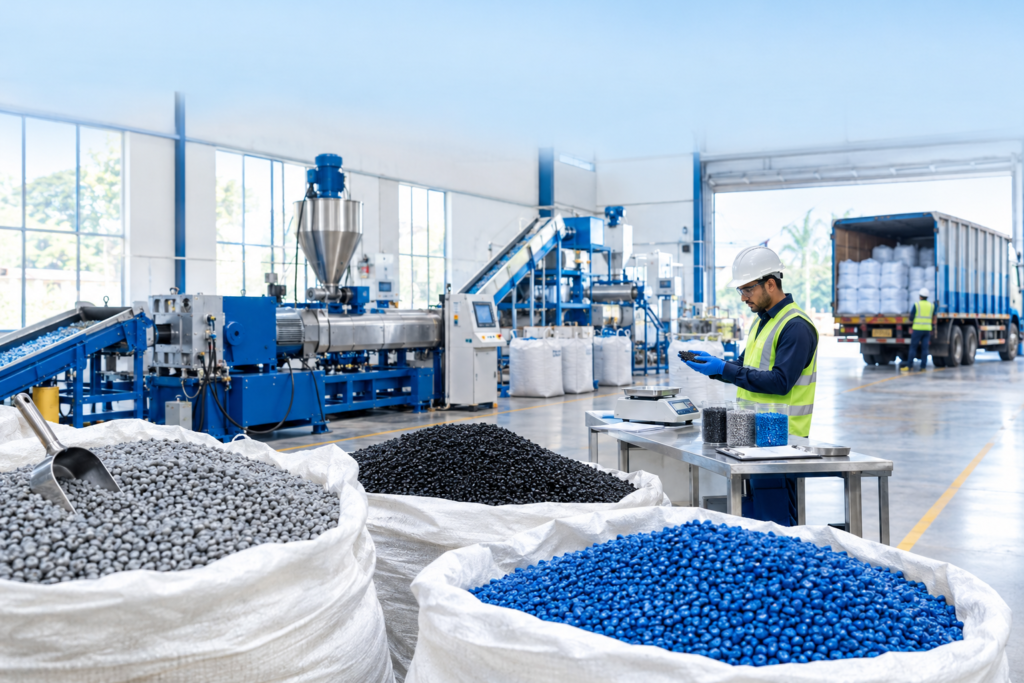
Plastic scrap recycling is the process of collecting, sorting, cleaning, and reprocessing used plastic materials into reusable raw materials. These recycled materials can then be used for manufacturing various industrial and consumer products.
The recycling process helps reduce landfill waste, conserve natural resources, and minimize dependence on virgin plastic production. Modern recycling technologies have made it possible to recover high-quality materials suitable for numerous applications.
Why Plastic Scrap Is Valuable
Many businesses mistakenly consider plastic waste as a disposal problem. In reality, plastic scrap has significant economic value because it can be processed and reused multiple times.
Some key reasons why plastic scrap is valuable include:
- Lower production costs
- Sustainable manufacturing support
- Reduced environmental impact
- Consistent raw material availability
- Increased recycling opportunities
- Support for circular economy initiatives
Industries increasingly recognize the value of recycled materials as part of their long-term sustainability strategies.
Common Types of Plastic Scrap
HDPE Scrap
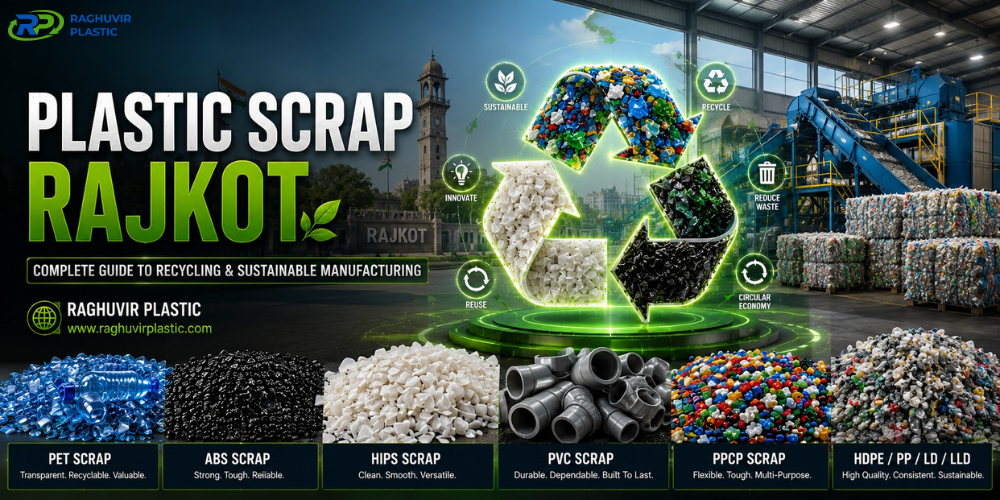
HDPE is one of the most commonly recycled plastics. It is widely used in industrial containers, pipes, drums, detergent bottles, and storage tanks.
Recycled HDPE is used for:
- Plastic pallets
- Industrial containers
- Piping systems
- Construction materials
- Storage products
PP Scrap
Polypropylene is a versatile plastic used in packaging, automotive components, furniture, and industrial applications.
Recycled PP is commonly used in:
- Automotive parts
- Storage bins
- Industrial packaging
- Consumer goods
- Plastic crates
PET Scrap
PET scrap is primarily sourced from beverage bottles and food packaging materials.
Recycled PET can be transformed into:
- Polyester fibers
- Packaging materials
- Textile products
- Industrial containers
- New PET products
PVC Scrap
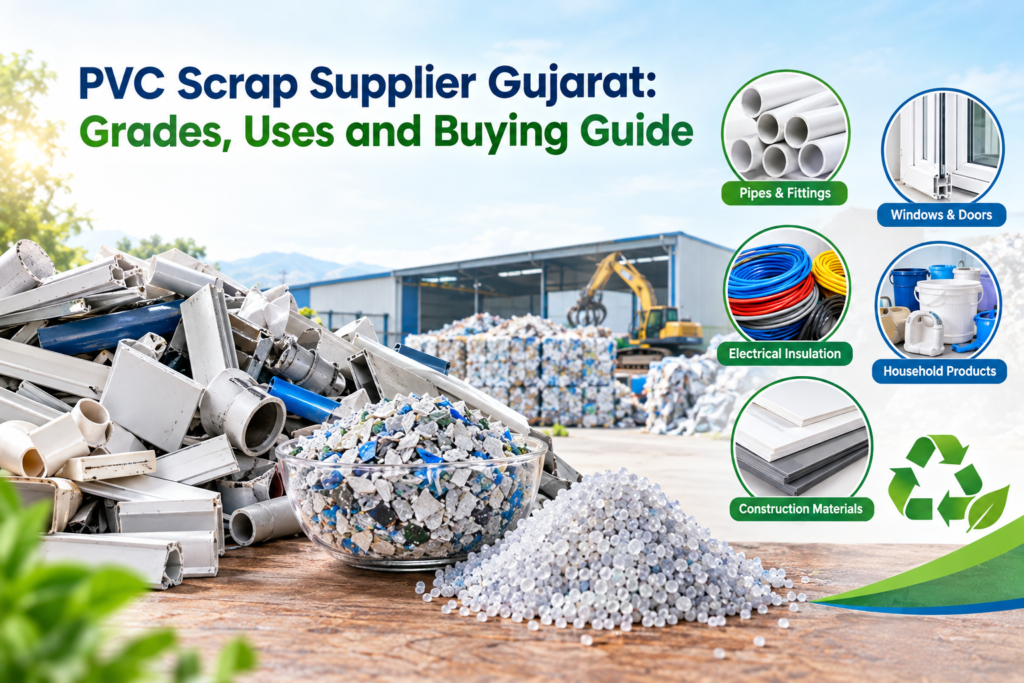
PVC is commonly used in construction and infrastructure projects.
Recycled PVC supports manufacturing of:
- Pipes
- Flooring products
- Cable insulation
- Fencing materials
- Industrial components
ABS Scrap
ABS is an engineering-grade plastic widely used in electronics and automotive manufacturing.
Applications include:
- Electronic housings
- Automotive components
- Industrial equipment
- Consumer products
HIPS Scrap
High Impact Polystyrene offers excellent processing capabilities and impact resistance.
Recycled HIPS is commonly used for:
- Packaging products
- Appliance components
- Display materials
- Consumer goods
Importance of Plastic Recycling in Rajkot
Rajkot continues to expand as a manufacturing and industrial center. This growth creates increased demand for recycled materials and responsible waste management solutions.
The recycling industry helps industries reduce waste generation while improving resource efficiency. Businesses that participate in recycling initiatives contribute to environmental sustainability while supporting industrial growth.
Recycling also helps divert plastic waste away from landfills and encourages responsible material recovery practices. Rajkot’s growing industrial ecosystem benefits from the availability of quality recycled plastic materials.
Benefits of Recycled Plastic Materials
Cost Efficiency
Recycled plastics often provide a cost-effective alternative to virgin materials. Manufacturers can reduce production expenses without compromising functionality.
Environmental Sustainability
Recycling reduces plastic pollution and lowers the demand for new raw materials. This helps conserve resources and supports environmental protection efforts.
Resource Conservation
Using recycled materials reduces the consumption of petroleum-based resources used in virgin plastic production.
Waste Reduction
Plastic recycling helps reduce landfill accumulation and promotes responsible waste management.
Support for Circular Economy
Recycling keeps materials in productive use for longer periods, helping create a sustainable circular economy.
Plastic Scrap Collection and Sorting Process
Efficient recycling begins with proper collection and sorting.
The process generally includes:
Material Identification
Different plastic grades are identified and separated.
Sorting
Materials are categorized based on type, color, and quality.
Cleaning
Contaminants are removed to improve material quality.
Processing
Plastic scrap is processed into reusable forms suitable for manufacturing.
Distribution
Processed materials are supplied to recyclers and manufacturers.
This systematic approach ensures consistent material quality and improved recycling efficiency.
Industrial Applications of Recycled Plastic
Recycled plastics support numerous industries.
Manufacturing Industry
Recycled materials are used in production processes across various sectors.
Automotive Industry
Plastic components used in vehicles often contain recycled materials.
Construction Industry
Recycled plastics are used for pipes, panels, insulation, and other building materials.
Packaging Industry
Many packaging products now incorporate recycled content.
Consumer Goods Industry
Household products, storage containers, and furniture frequently use recycled plastics.
Factors Affecting Plastic Scrap Quality
Several factors influence the value and usability of recycled plastic materials.
Material Purity
Higher purity levels result in better-quality recycled products.
Proper Sorting
Accurate segregation improves processing efficiency.
Moisture Content
Dry materials are easier to process and often command better value.
Contamination Levels
Lower contamination improves recycling outcomes.
Consistent Supply
Reliable availability helps maintain production continuity.
Future of Plastic Recycling
The future of recycling continues to evolve with advancements in technology and sustainability initiatives.
Industries are increasingly investing in:
- Advanced sorting systems
- Improved recycling technologies
- Circular economy programs
- Sustainable manufacturing processes
- Responsible resource management
Growing awareness of environmental issues is expected to further increase demand for recycled materials in the coming years.
Choosing a Reliable Plastic Scrap Partner
Businesses should look for suppliers that provide:
- Consistent material quality
- Reliable supply
- Proper sorting and grading
- Transparent business practices
- Industry expertise
- Sustainable recycling support
A dependable recycling partner helps manufacturers achieve production goals while supporting environmental responsibility.
Conclusion
Plastic Scrap Rajkot continues to play an important role in supporting sustainable manufacturing and responsible recycling practices. With increasing industrial demand and greater focus on environmental protection, recycled plastic materials have become valuable resources for modern businesses.
From HDPE and PP to PET, PVC, ABS, and HIPS, recycled plastics support a wide range of industrial applications. By embracing recycling and responsible material reuse, industries can reduce waste, lower costs, and contribute to a cleaner future.
As recycling technologies continue to improve, the importance of Plastic Scrap Rajkot solutions will only continue to grow, helping businesses and communities move toward a more sustainable and resource-efficient future.