

Introduction
Manufacturing industries are increasingly looking for practical ways to reduce material waste, improve resource efficiency and incorporate recycled inputs into their production processes. One of the most useful approaches is the adoption of recycled plastic for manufacturing, where recovered plastic materials are processed and prepared for use in new industrial products.
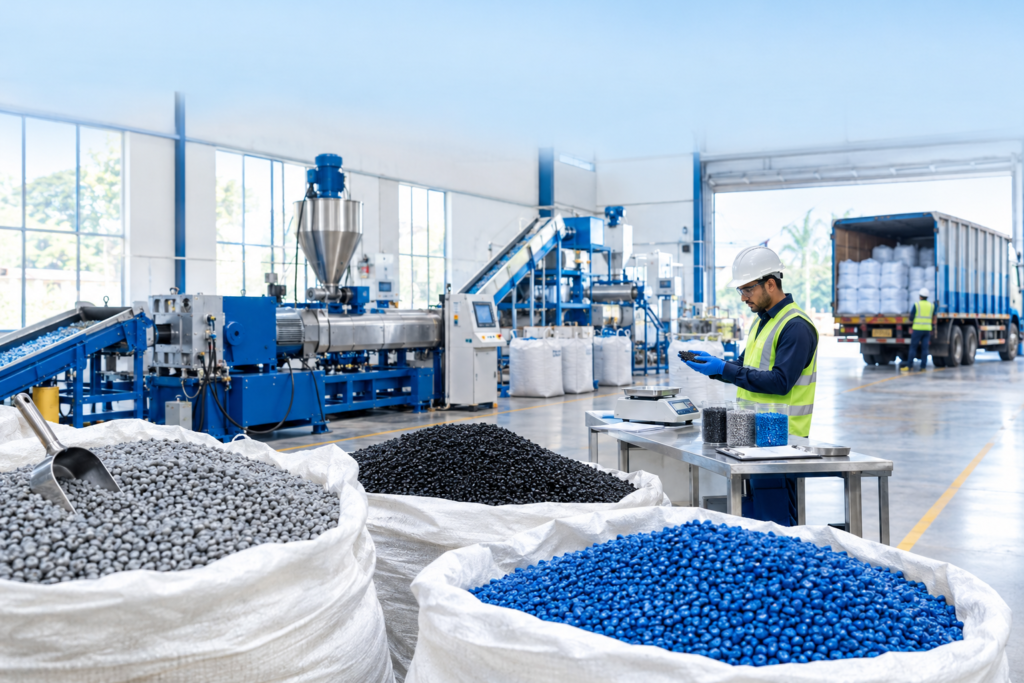
Recycled plastic for manufacturing can come in several forms, including scrap, flakes, regrind, granules and pellets. Depending on the polymer type, source, processing history and quality requirements, these materials can be used across injection molding, extrusion, blow molding, compounding and other manufacturing applications.
For manufacturers in Gujarat, having access to a reliable recycled plastic material supplier can make it easier to source suitable materials in bulk while maintaining consistency in supply and specifications.
What Is Recycled Plastic for Manufacturing?
Recycled plastic for manufacturing refers to plastic material recovered from post-industrial or post-consumer sources and processed so that it can potentially be used again as a manufacturing input.
Instead of sending usable plastic waste directly to disposal, the material can be collected, sorted according to polymer type, cleaned where required, processed and converted into a form that is more convenient for industrial use.
Common forms include:
- Plastic flakes
- Plastic regrind
- Crushed plastic
- Recycled granules
- Recycled pellets
- Sorted plastic scrap
- Reprocessed plastic materials
The suitability of recycled material depends on several factors. These include polymer identification, contamination level, color, moisture, additives, previous processing history and the requirements of the final product.
This means manufacturers should select recycled plastic based on their actual production requirements rather than simply choosing the lowest-cost material.
Why Is Recycled Plastic Important for Manufacturing?
Plastic is widely used because of its versatility, durability, lightweight nature and processing flexibility. However, manufacturing processes can also generate substantial quantities of plastic waste.
Recovering and reusing suitable plastic materials can help create a more circular material flow.
1. Better Utilization of Plastic Waste
Recycled plastic for manufacturing operations may generate runners, rejected components, trimming waste, offcuts and other plastic residues. When suitable for recovery, these materials can become valuable secondary raw materials.
2. Reduced Dependence on Virgin Materials
Using Recycled plastic for manufacturing inputs can reduce the amount of virgin polymer required for certain applications. The actual replacement percentage depends on the material, product specifications and processing requirements.
3. Resource Efficiency
Recycled plastic for manufacturing keeps suitable plastic material within the manufacturing cycle for longer. This supports more efficient use of existing polymer resources.
4. Potential Cost Advantages
Depending on polymer type, grade, quality and market conditions, recycled plastic may offer manufacturers an economical alternative for applications where virgin material is not necessary.
However, pricing should always be evaluated together with quality, consistency and processing performance.
5. Support for Circular Manufacturing
Recycled plastic for manufacturing supports a circular approach in which recovered materials are processed and returned to productive use rather than treated only as waste.
Major Types of Recycled Plastic Materials
Different polymers have different properties and applications. Manufacturers should understand the material they are purchasing before introducing it into production.
HDPE Recycled Plastic
High-Density Polyethylene, commonly known as HDPE, is widely used for industrial and consumer products.
Recycled HDPE can be available in forms such as scrap, flakes, regrind and granules.
Potential applications include:
- Containers
- Industrial products
- Pipes and fittings
- Household products
- Packaging components
- Injection-molded products
- Blow-molded products
The suitability of recycled HDPE depends on its grade, contamination level, color, melt characteristics and previous processing history.
PP Recycled Plastic
Polypropylene, or PP, is another important polymer used in manufacturing.
Recycled PP can be used in suitable applications such as:
- Automotive components
- Household products
- Industrial components
- Storage products
- Packaging applications
- Injection-molded parts
Manufacturers should assess properties such as flow behavior, impact performance, stiffness, color and contamination before selecting recycled PP.
LDPE Recycled Plastic
Low-Density Polyethylene is known for its flexibility and is commonly associated with films, bags and flexible plastic products.
Recycled LDPE can be used for suitable applications involving:
- Plastic films
- Bags
- Flexible products
- Packaging-related products
- Industrial plastic components
The quality of recycled LDPE can vary significantly depending on the original source and sorting process.
LLDPE Recycled Plastic
Linear Low-Density Polyethylene offers flexibility and toughness and is commonly used in films and other flexible applications.
Recycled LLDPE may be suitable for selected manufacturing processes, particularly when the material characteristics match the requirements of the finished product for Recycled plastic for manufacturing.
ABS Recycled Plastic
ABS, or Acrylonitrile Butadiene Styrene, is an engineering plastic commonly used where a combination of strength, rigidity and appearance is required.
Recycled ABS can be considered for applications such as:
- Automotive components
- Electrical products
- Consumer products
- Industrial parts
- Injection-molded components
Material testing and grade selection are especially important for engineering applications.
PET Recycled Plastic
Polyethylene Terephthalate, or PET, is widely used in bottles, packaging and fiber-related applications.
Depending on the source and processing route, recycled PET may be supplied in forms such as flakes or processed material.
HIPS Recycled Plastic
High Impact Polystyrene, or HIPS, can also be recovered and processed for selected applications where its characteristics are appropriate.
Manufacturers should evaluate the grade, color, contamination and intended processing method before purchasing recycled HIPS.
Forms of Recycled Plastic for Manufacturing
The same polymer can be supplied in different physical forms.
Plastic Scrap
Plastic scrap is recovered plastic material that has not necessarily undergone extensive processing after collection.
It can include production waste, rejected components, runners, packaging waste and other polymer materials.
Plastic Flakes
Plastic flakes are produced by shredding or grinding plastic into smaller pieces.
Flakes can make sorting, handling and further processing easier.
Plastic Regrind
Regrind is ground plastic material produced through mechanical size reduction. It is often used as a secondary raw material for suitable manufacturing applications.
Recycled Granules
Granules provide a more standardized physical form and may be produced through further processing of recovered plastic.
Depending on the material and processing system, granules can be convenient for manufacturing operations.
Recycled Pellets
Pelletized recycled plastic can provide improved handling and feeding characteristics for certain production systems.
The form a manufacturer chooses should depend on the machinery, processing method and material specifications.
How Is Recycled Plastic Prepared for Manufacturing?
A typical recycling and material-preparation process may involve several stages.
Collection
Plastic materials are collected from industrial and other suitable sources.
Sorting
The material is separated based on polymer type, color, source and other relevant characteristics.
Correct sorting is important because different polymers have different processing properties.
Cleaning
Depending on the source, plastic may require cleaning to remove dirt, labels, residues or other contaminants.
Shredding or Grinding
The plastic is reduced into smaller pieces to make it easier to process.
Separation and Quality Checking
Additional sorting and inspection can be performed to remove unsuitable materials and improve consistency.
Reprocessing
Depending on the material and intended application, the processed plastic may be converted into regrind, flakes, granules or other usable forms.
Packaging and Supply
The finished material can then be packaged for transportation and supplied to manufacturers or other industrial users.
Applications of Recycled Plastic for Manufacturing
Recycled plastic for manufacturing can be used across many industrial sectors when the material meets the application’s requirements.
Injection Molding
Injection molding is one of the most common manufacturing processes for plastic components.
Suitable recycled materials can potentially be used for:
- Industrial housings
- Containers
- Automotive components
- Household products
- Utility products
- Plastic fittings
- Various molded components
The appropriate recycled polymer and grade depend on the product’s performance requirements.
Extrusion
Extrusion processes continuously form plastic into products such as profiles, sheets, films, pipes and other shapes.
Suitable recycled HDPE, PP, LDPE and LLDPE materials can be considered for different extrusion applications.
Blow Molding
Blow molding is used to manufacture hollow plastic products.
Depending on the application and material specification, recycled plastic can be incorporated into selected blow-molding processes.
Plastic Compounding
Recycled polymers may also be used as inputs for compounding operations. Additional materials can be incorporated to modify specific characteristics according to the intended application.
Automotive Manufacturing
Recycled plastic can be used in selected automotive applications where material specifications permit it.
Possible applications include interior components, covers, housings and other non-critical plastic parts.
Packaging
Recycled plastics are used in various packaging-related applications, subject to product requirements, regulatory requirements and the suitability of the specific recycled material.
Household Products
Storage products, containers, organizers and other household products can potentially use suitable recycled plastic materials.
Benefits of Using Recycled Plastic in Industrial Manufacturing
The advantages of recycled plastic depend on the material and application, but several broad benefits make it an important option for manufacturers.
Supports Waste Reduction
Recovering usable plastic keeps material in productive use and reduces the amount of plastic that may otherwise require disposal.
Can Improve Material Efficiency
Manufacturers can incorporate suitable secondary materials into production where technical requirements allow.
Supports Circular Economy Goals
Using recycled polymer materials helps connect waste collection, processing and manufacturing into a more circular supply chain.
Suitable for Multiple Processing Methods
Different recycled plastic forms can be prepared for injection molding, extrusion, blow molding and other industrial processes.
Bulk Availability
For manufacturers with regular production requirements, sourcing recycled plastic materials in bulk can help simplify procurement and production planning.
Material-Specific Selection
Manufacturers can select materials according to polymer type, application, color, form and required specifications.
Recycled Plastic vs Virgin Plastic
Recycled and virgin plastic are not interchangeable in every application.
Virgin plastic is produced from newly manufactured polymer feedstock, while recycled plastic is obtained by recovering and processing existing plastic materials.
Recycled material can offer advantages in resource efficiency and may be suitable for many applications. However, recycled materials can have greater variability depending on their source and recycling history.
Important factors include:
- Polymer purity
- Contamination
- Color
- Melt flow characteristics
- Moisture
- Additives
- Previous processing history
- Mechanical requirements
- Thermal requirements
- End-product specifications
For demanding applications, manufacturers should evaluate material samples and conduct appropriate testing before making large-scale production changes.
How to Choose Recycled Plastic for Manufacturing
Choosing the correct material is one of the most important steps in using recycled plastic successfully.
1. Identify the Polymer
First determine whether the application requires HDPE, PP, LDPE, LLDPE, ABS, PET, HIPS or another polymer.
2. Define the Manufacturing Process
Tell the supplier whether the material will be used for injection molding, extrusion, blow molding, compounding or another process.
3. Check Material Form
Determine whether your machinery is designed for scrap, regrind, flakes, granules or pellets.
4. Consider Color Requirements
Color can influence both appearance and processing decisions. If the finished product has a specific color requirement, discuss the available material accordingly.
5. Evaluate Contamination
Contamination can negatively affect processing and finished-product quality. Material should therefore be inspected according to the application’s requirements.
6. Ask About Consistency
For continuous manufacturing, consistent supply and material characteristics are important.
7. Request Samples When Appropriate
Testing a representative sample before placing a large order can help manufacturers evaluate whether the material is suitable for their process.
8. Consider Supply Capacity
A supplier may offer technically suitable material, but manufacturers also need to consider whether the supplier can support their required quantity and delivery schedule.
Why Gujarat Is an Important Market for Recycled Plastic
In Recycled plastic for manufacturing Gujarat has a strong industrial and manufacturing ecosystem, creating demand for a wide range of polymer materials.
Manufacturing activity across areas such as Rajkot, Ahmedabad, Surat, Vadodara, Morbi, Vapi, Bharuch and other industrial centers creates opportunities for plastic recyclers, traders, processors and manufacturers to participate in a circular material supply chain.
For manufacturers, working with a recycled plastic material supplier in Gujarat can make procurement more convenient, particularly when regular or bulk quantities are required.
Rajkot is also an important industrial center with manufacturers involved in engineering, automotive components, machinery, plastics and other industrial sectors. This creates demand for reliable secondary plastic materials suitable for different applications.
Role of a Recycled Plastic Material Supplier
A supplier plays an important role in connecting processed plastic materials with manufacturing industries.
A reliable supplier should ideally focus on:
- Proper material identification
- Sorting
- Material quality
- Consistent supply
- Clear communication
- Bulk order handling
- Appropriate packaging
- Timely delivery
- Understanding customer requirements
For manufacturers, the relationship should go beyond simply buying plastic. The supplier should understand what type of polymer and material form the customer requires.
Recycled Plastic for Manufacturing in Rajkot
For businesses searching for recycled plastic for manufacturing in Rajkot, local sourcing can provide practical advantages such as easier communication, transportation convenience and access to industrial material suppliers.
Manufacturers can evaluate materials such as:
- HDPE
- PP
- LDPE
- LLDPE
- ABS
- PET
- HIPS
- Other suitable recycled polymers
The right selection depends on the production process and finished-product specifications.
Raghuvir Plastic is based in Rajkot, Gujarat and works with plastic materials including HDPE, PP, LD, LLDPE, PVC, PET, ABS, HIPS, PPCP and Roto Molding scrap, supporting manufacturers and recyclers seeking suitable plastic materials.
How Manufacturers Can Improve Recycled Material Procurement
A structured purchasing process can make recycled material sourcing more effective.
Start by defining the exact polymer and application. Then communicate the required quantity, physical form, color requirements and processing method to the supplier.
Manufacturers should maintain records of:
- Material type
- Supplier
- Batch information
- Quantity purchased
- Test results where applicable
- Production performance
- Quality observations
This information can help manufacturers identify materials that consistently perform well in their processes for Recycled plastic for manufacturing.
Future of Recycled Plastic in Manufacturing
The role of recycled plastic in manufacturing is expected to remain important as industries focus more strongly on resource efficiency and circular production.
Recycled plastic for manufacturing Improved sorting technologies, better recycling systems, material testing and greater awareness among manufacturers can help expand the use of recycled polymers.
The future is not simply about recycling more plastic. It is about recovering suitable materials, maintaining quality and returning them to applications where they can deliver practical value.
Manufacturers that understand material selection and quality control can make better decisions about where recycled plastic fits within their production systems.
Frequently Asked Questions
What is recycled plastic for manufacturing?
Recycled plastic for manufacturing is recovered and processed plastic material that can be used as a secondary raw material for suitable industrial applications.
Which recycled plastics are commonly used in manufacturing?
Common materials include HDPE, PP, LDPE, LLDPE, PET, ABS and HIPS. The appropriate polymer depends on the manufacturing process and finished-product requirements.
Can recycled plastic be used for injection molding?
Yes, suitable recycled plastic materials can be used for various injection-molding applications. The material must be selected according to the machine, product specifications and required performance.
Is recycled plastic cheaper than virgin plastic?
Recycled plastic can offer cost advantages in some applications, but pricing depends on polymer type, quality, processing, supply and market conditions. Cost should be evaluated alongside material performance and consistency.
What is plastic regrind?
Plastic regrind is plastic that has been mechanically ground into smaller pieces. It can be used as a secondary raw material for suitable manufacturing processes.
Can recycled HDPE and PP be used for industrial products?
Yes, recycled HDPE and PP can be suitable for many industrial applications when their properties and quality match the requirements of the product.
How do I choose the right recycled plastic material?
Consider the polymer type, manufacturing process, material form, color, contamination level, processing characteristics and finished-product requirements. Testing samples can also be useful.
Why should manufacturers work with a reliable supplier?
A reliable supplier can help manufacturers obtain appropriate materials with better consistency, clear specifications, bulk availability and dependable supply for Recycled plastic for manufacturing
Conclusion
Recycled plastic for manufacturing provides manufacturers with an opportunity to incorporate recovered polymer materials into suitable industrial applications while supporting more efficient use of plastic resources.
From HDPE and PP to LDPE, LLDPE, ABS, PET and HIPS, different recycled polymers can serve different manufacturing requirements. Materials may be available as scrap, flakes, regrind, granules or pellets, depending on how they have been processed.
Successful use of recycled plastic depends on choosing the right polymer, understanding the material’s characteristics, controlling contamination and matching the material to the manufacturing process.
For manufacturers in Gujarat and Rajkot, working with an experienced recycled plastic material supplier can simplify sourcing and help establish a dependable supply chain for secondary plastic materials.
Raghuvir Plastic supports industrial buyers and recyclers with a range of plastic scrap and recycled material options, helping connect recovered plastic materials with manufacturing requirements in Gujarat.